Bullock's Oriole
Showing posts with label B. Show all posts
Monday, February 21, 2011
Monday, January 17, 2011
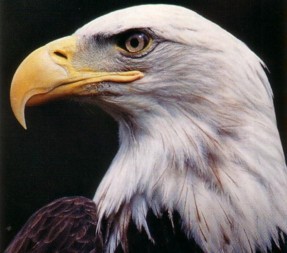
Bald Eagle
The bald eagle, with its snowy-feathered (not bald) head and white tail, is the proud national bird symbol of the United States—yet the bird was nearly wiped out there. For many decades, bald eagles were hunted for sport and for the "protection" of fishing grounds. Pesticides like DDT also wreaked havoc on eagles and other birds. These chemicals collect in fish, which make up most of the eagle's diet. They weaken the bird's eggshells and severely limited their ability to reproduce. Since DDT use was heavily restricted in 1972, eagle numbers have rebounded significantly and have been aided by reintroduction programs. The result is a wildlife success story—the U.S. Fish and Wildlife Service has upgraded the birds from endangered to threatened. Though their numbers have grown in much of their range, bald eagles remain most abundant in Alaska and Canada. These powerful birds of prey use their talons to fish, but they get many of their meals by scavenging carrion or stealing the kills of other animals. (Such thievery famously prompted Ben Franklin to argue against the bird's nomination as the United State's national symbol.) They live near water and favor coasts and lakes where fish are plentiful, though they will also snare and eat small animals.
Bald eagles are believed to mate for life. A pair constructs an enormous stick nest—one of the bird-world's biggest—high above the ground and tends to a pair of eggs each year. Immature eagles are dark, and until they are about five years old, they lack the distinctive white markings that make their parents so easy to identify. Young eagles roam great distances. Florida birds have been spotted in Michigan, and California eagles have traveled all the way to Alaska.
Labels:
B
Blue-Gray Gnatcatcher
The blue-gray gnatcatcher is active, often foraging in trees or shrubs. Polytypic. Length 4.3"(11 cm).
Identification Thin and long tailed, with outer tail feathers almost entirely white (tail from below looks white). The bill is thin and pale gray. Breeding male: blue-gray above, including most of head and back. Crown has a black line at the forecrown that extends along the sides of crown; white eye ring contrasts with gray face. Wings brownish gray; tertials blackish, edged white. Underparts entirely white. Nonbreeding male: black on crown absent, resulting in grayish crown. Female: like nonbreeding male but grayer above.
Geographic Variation At least 7 subspecies; 3 north of Mexico. Nominate caerulea more extensively white tail; western obscura has a black base to the outer rectrices that extend beyond the undertail coverts. Western male slightly less blue on the back, with black forehead mark that is thicker, and less like a supraloral line found in nominate caerulea. Western females are dingier above; easterns are gray. A third subspecies, deppei, from south Texas, is smaller and perhaps paler on average, but distinguishing these characteristics is likely impossible in the field.
Similar Species Most confusion is likely to occur with black-tailed, and to a lesser extent, California gnatcatcher. These species have different calls; California is also darker below. The best feature is the tail pattern. Blue-gray is almost entirely white on outer rectrices; black-tailed and California have mostly black outer rectrices with white tips or edges. Be aware that in late summer gnatcatchers molt their tails. blue-grays will look mostly dark from below when their outer rectrices are dropped. See black-capped gnatcatcher.
Voice Call: a querulous pwee or various mewing calls. Western birds have lower, harsher notes, more like wrens; easterns’ common call slightly more wiry, thin. Song: thin, wiry notes; lower and harsher in western populations.
Status and Distribution Common. Breeding: various woodlands. Migration: spring migration begins in southern states in late Feb. Earliest migrants reach Great Lakes in late March, typically in early April. Peak late April through early May, with stragglers to later in the month. Fall migration starts as early as late June or July, in southern states. Farther north migration starts mid-August, with peak mid-September. Small numbers seen into October. Vagrant: annual in fall in small numbers to Atlantic Canada, August–November. Casual in spring to Atlantic Canada; to British Columbia and Ottawa in spring and fall. Winter: southern United States, south to Guatemala and Honduras.
Population Northward expansion in northeastern United States and southeastern Canada occurred in the 20th century.
—From the National Geographic book Complete Birds of North America, 2006
Identification Thin and long tailed, with outer tail feathers almost entirely white (tail from below looks white). The bill is thin and pale gray. Breeding male: blue-gray above, including most of head and back. Crown has a black line at the forecrown that extends along the sides of crown; white eye ring contrasts with gray face. Wings brownish gray; tertials blackish, edged white. Underparts entirely white. Nonbreeding male: black on crown absent, resulting in grayish crown. Female: like nonbreeding male but grayer above.
Geographic Variation At least 7 subspecies; 3 north of Mexico. Nominate caerulea more extensively white tail; western obscura has a black base to the outer rectrices that extend beyond the undertail coverts. Western male slightly less blue on the back, with black forehead mark that is thicker, and less like a supraloral line found in nominate caerulea. Western females are dingier above; easterns are gray. A third subspecies, deppei, from south Texas, is smaller and perhaps paler on average, but distinguishing these characteristics is likely impossible in the field.
Similar Species Most confusion is likely to occur with black-tailed, and to a lesser extent, California gnatcatcher. These species have different calls; California is also darker below. The best feature is the tail pattern. Blue-gray is almost entirely white on outer rectrices; black-tailed and California have mostly black outer rectrices with white tips or edges. Be aware that in late summer gnatcatchers molt their tails. blue-grays will look mostly dark from below when their outer rectrices are dropped. See black-capped gnatcatcher.
Voice Call: a querulous pwee or various mewing calls. Western birds have lower, harsher notes, more like wrens; easterns’ common call slightly more wiry, thin. Song: thin, wiry notes; lower and harsher in western populations.
Status and Distribution Common. Breeding: various woodlands. Migration: spring migration begins in southern states in late Feb. Earliest migrants reach Great Lakes in late March, typically in early April. Peak late April through early May, with stragglers to later in the month. Fall migration starts as early as late June or July, in southern states. Farther north migration starts mid-August, with peak mid-September. Small numbers seen into October. Vagrant: annual in fall in small numbers to Atlantic Canada, August–November. Casual in spring to Atlantic Canada; to British Columbia and Ottawa in spring and fall. Winter: southern United States, south to Guatemala and Honduras.
Population Northward expansion in northeastern United States and southeastern Canada occurred in the 20th century.
—From the National Geographic book Complete Birds of North America, 2006
Labels:
B
Blue Jay
The blue jay is a familiar and widespread bird throughout the East. Generally loved or hated, it has acquired a Jekyll-and-Hyde reputation. It is a frequent visitor to backyard feeding stations, where its raucous and rambunctious behavior is well known, but this adaptable jay is equally at home stealthily moving through the forest, plundering other birds’ nests, searching for nuts, or quietly raising its young. Polytypic. Length 11" (28 cm).
Identification The blue is a nearly unmistakable crested jay with black barring and white patches on blue wings and tail; its underparts are paler with a dark necklace. Juveniles are more grayish above with gray lores and more limited white markings on the wings.
Geographic Variation Minor, obscured by broad overlap. Three subspecies are generally recognized. Northern bromia average the largest and brightest. Southeastern cristata generally show a subtle violaceous wash and are smallest. Western cyanotephra are generally duller and paler blue.
Similar Species Nearly unmistakable. Occasionally hybridizes with the Steller’s jay; hybrids appear intermediate between the 2 parent species.
Voice Vocal with a diverse array of vocalizations. Call: a piercing jay jay jay; a musical yo-ghurt; frequently imitates raptors, particularly the red-shouldered hawk. Actively migrating birds are typically silent.
Status and Distribution Common. Breeding: a variety of mixed forests, woodlands, suburbs, and parks. Migration: diurnal migrant. Northern populations move south in varying numbers from year to year. During flight years, large loose flocks can fill the sky, particularly along the shores of the Great Lakes and other northern locations known for raptor concentrations. In fall, first detected away from breeding grounds as early as July (typically earliest in big flight years); peaks in Great Lakes late September–mid-October. Winter: distribution generally similar, but departs from northernmost breeding locales. Vagrant: casual chiefly in fall and winter west of the Rockies, recorded most frequently in the Northwest. Accidental to Bermuda.
Population Numbers are increasing in parts of the West. Domestic cats are likely the most significant human-caused source of mortality.
—From the National Geographic book Complete Birds of North America, 2006
Identification The blue is a nearly unmistakable crested jay with black barring and white patches on blue wings and tail; its underparts are paler with a dark necklace. Juveniles are more grayish above with gray lores and more limited white markings on the wings.
Geographic Variation Minor, obscured by broad overlap. Three subspecies are generally recognized. Northern bromia average the largest and brightest. Southeastern cristata generally show a subtle violaceous wash and are smallest. Western cyanotephra are generally duller and paler blue.
Similar Species Nearly unmistakable. Occasionally hybridizes with the Steller’s jay; hybrids appear intermediate between the 2 parent species.
Voice Vocal with a diverse array of vocalizations. Call: a piercing jay jay jay; a musical yo-ghurt; frequently imitates raptors, particularly the red-shouldered hawk. Actively migrating birds are typically silent.
Status and Distribution Common. Breeding: a variety of mixed forests, woodlands, suburbs, and parks. Migration: diurnal migrant. Northern populations move south in varying numbers from year to year. During flight years, large loose flocks can fill the sky, particularly along the shores of the Great Lakes and other northern locations known for raptor concentrations. In fall, first detected away from breeding grounds as early as July (typically earliest in big flight years); peaks in Great Lakes late September–mid-October. Winter: distribution generally similar, but departs from northernmost breeding locales. Vagrant: casual chiefly in fall and winter west of the Rockies, recorded most frequently in the Northwest. Accidental to Bermuda.
Population Numbers are increasing in parts of the West. Domestic cats are likely the most significant human-caused source of mortality.
—From the National Geographic book Complete Birds of North America, 2006
Labels:
B
Black-Headed Grosbeak
The handsome black-headed grosbeak is the western counterpart to the East’s rose-breasted grosbeak, and the 2 even occasionally hybridize where they come into contact in the western Great Plains. Singing males are generally easy to see in a variety of habitats, from open coniferous forests to montane riparian areas. The black-headed is insectivorous during the nesting season and then mainly frugivorous, particularly during late summer. Like the rose-breasted, it is a neotropical migrant. Males are striking; females and immatures are duller. The bill is large and conical, typically bicolored; the wing linings are yellow in both sexes. Polytypic (the 2 North American subspecies are poorly differentiated; the coastal birds have shorter wings, smaller bills, and a tawnier supercilium than the interior birds). Length 8.3" (21 cm).
Identification Adult male: plumage is striking: a cinnamon-colored body including collar, with entirely black head, mostly black back with narrow streaks, black wings with bold white wing bars, white tips to tertials, and white patch at the base of primaries. Center to lower belly yellow. Adult winter: similar to adult male, but head less black, supercilium and crown strip cinnamon, and streaks on back more prominent. First-summer male: like adult winter male, but wings less black. First-winter male: like female, but underparts more cinnamon without streaking, and underside of tail gray. Adult female: mainly dull brown, with streaked back, buffy-white nape and supercilium. Underparts variable, from buffy to almost white, with varying amount of streaking on the sides of the breast and flanks.
Similar Species The adult male not confused with other species. The female and first-winter male confused with the female and first-winter male rose-breasted. Note the different amount of streaking on the underparts and the color of the bill.
Voice Call: a sharp eek, similar to the rose-breasted’s, but decidedly less squeaky. Song: robinlike series of warbled phrases, like rose-breasted’s. Virtually indistinguishable from the hepatic tanager’s song, where the 2 species overlap.
Status and Distribution Common throughout entire West. Breeding: nests in a variety of habitats, from mixed coniferous forest to montane riparian. Arrives on breeding ground from mid-April (in south) to mid-May (in north). Migration: migrates in spring singly or in small groups, unlike the rose-breasted, which sometimes migrates in large flocks. In fall, not uncommon to see several in a fruiting tree. Adults begin migrating south by mid-July. Juveniles migrate later, through October. Winter: mainly Mexico. Vagrant: casual or accidental wanderer, mainly in fall and winter, to virtually all eastern states and provinces. Spring overshoots known from Alaska and Northwest Territories.
Population No known threats.
—From the National Geographic book Complete Birds of North America, 2006
Identification Adult male: plumage is striking: a cinnamon-colored body including collar, with entirely black head, mostly black back with narrow streaks, black wings with bold white wing bars, white tips to tertials, and white patch at the base of primaries. Center to lower belly yellow. Adult winter: similar to adult male, but head less black, supercilium and crown strip cinnamon, and streaks on back more prominent. First-summer male: like adult winter male, but wings less black. First-winter male: like female, but underparts more cinnamon without streaking, and underside of tail gray. Adult female: mainly dull brown, with streaked back, buffy-white nape and supercilium. Underparts variable, from buffy to almost white, with varying amount of streaking on the sides of the breast and flanks.
Similar Species The adult male not confused with other species. The female and first-winter male confused with the female and first-winter male rose-breasted. Note the different amount of streaking on the underparts and the color of the bill.
Voice Call: a sharp eek, similar to the rose-breasted’s, but decidedly less squeaky. Song: robinlike series of warbled phrases, like rose-breasted’s. Virtually indistinguishable from the hepatic tanager’s song, where the 2 species overlap.
Status and Distribution Common throughout entire West. Breeding: nests in a variety of habitats, from mixed coniferous forest to montane riparian. Arrives on breeding ground from mid-April (in south) to mid-May (in north). Migration: migrates in spring singly or in small groups, unlike the rose-breasted, which sometimes migrates in large flocks. In fall, not uncommon to see several in a fruiting tree. Adults begin migrating south by mid-July. Juveniles migrate later, through October. Winter: mainly Mexico. Vagrant: casual or accidental wanderer, mainly in fall and winter, to virtually all eastern states and provinces. Spring overshoots known from Alaska and Northwest Territories.
Population No known threats.
—From the National Geographic book Complete Birds of North America, 2006
Labels:
B
Black-Chinned Hummingbird
The western counterpart of the ruby-throated, the black-chinned regularly pumps its tail. Monotypic. Length 3.3–3.8" (8.5–9.5 cm); bill 16–22 mm.
Identification Best marks for all ages are narrow inner primaries and blunt primaries. Double-rounded tail. Age/sex differences as ruby-throated except as noted. Adult male: black throat with violet-blue lower band. Adult female: black-violet spots rare on throat. Immature male: Throat usually has black-violet spots.
Similar Species The black-chinned is often confused with Anna’s and Costa’s, which are chunkier and proportionately bigger headed, shorter billed, and shorter tailed; lack the narrow inner primaries of Archilochus; and molt wings in summer. Female/immature Anna’s slightly larger; underparts more mottled, including undertail coverts (mostly whitish on black-chinned); throat often with rose-red spots; wags tail infrequently. Female/immature Costa’s slightly smaller; face often plainer; wing tips often fall beyond tail tip at rest (shorter than tip on black-chinned). Anna’s call is a smacking chip, Costa’s is a high, tinny tik, both distinct from black-chinned. See ruby-throated.
Voice Call: Indistinguishable from ruby-throated but distinctive male wing-buzz in flight louder (and lower pitched than Selasphorus).
Status and Distribution Western North America to northwest Mexico. Breeding: common in riparian woodlands, foothills. Migration: mainly March–May, August–September. Winter: Mexico. Rare (mainly October–March) in Southeast; casual in Northeast (fall).
—From the National Geographic book Complete Birds of North America, 2006
Identification Best marks for all ages are narrow inner primaries and blunt primaries. Double-rounded tail. Age/sex differences as ruby-throated except as noted. Adult male: black throat with violet-blue lower band. Adult female: black-violet spots rare on throat. Immature male: Throat usually has black-violet spots.
Similar Species The black-chinned is often confused with Anna’s and Costa’s, which are chunkier and proportionately bigger headed, shorter billed, and shorter tailed; lack the narrow inner primaries of Archilochus; and molt wings in summer. Female/immature Anna’s slightly larger; underparts more mottled, including undertail coverts (mostly whitish on black-chinned); throat often with rose-red spots; wags tail infrequently. Female/immature Costa’s slightly smaller; face often plainer; wing tips often fall beyond tail tip at rest (shorter than tip on black-chinned). Anna’s call is a smacking chip, Costa’s is a high, tinny tik, both distinct from black-chinned. See ruby-throated.
Voice Call: Indistinguishable from ruby-throated but distinctive male wing-buzz in flight louder (and lower pitched than Selasphorus).
Status and Distribution Western North America to northwest Mexico. Breeding: common in riparian woodlands, foothills. Migration: mainly March–May, August–September. Winter: Mexico. Rare (mainly October–March) in Southeast; casual in Northeast (fall).
—From the National Geographic book Complete Birds of North America, 2006
Labels:
B
Black-Capped Chickadee
The most widespread, numerous, and geographically variable chickadee, this bird brightens winter days at bird feeders and eagerly takes advantage of nest boxes. It is curious, with little or no fear of humans, and it is famous for willingly, after a little “training,” taking seeds and nuts from the hand. During fall postbreeding movements, its noisy little parties usually contain titmice, nuthatches, woodpeckers, and other species. The calls of a flock of black-cappeds in the fall often signal the presence of migrant warblers and vireos. Polytypic. Length 5.3" (13 cm).
Identification Black cap; white cheek; black bib; gray upperparts; greater coverts, secondaries, and tertials edged conspicuously white in fall and winter (less distinct in summer when the white fringes are worn off); sides and flanks buffy or pinkish when fresh, fading to pale buff by summer when worn; outer tail feathers edged prominently white.
Geographic Variation Three subspecies groups differ in several characters. A “northwestern” group is small and dark-backed, with narrow white wing edgings, and flanks heavily washed buffy tan. An “interior western” group is large and pale-backed, with broad white wing edgings, and pale buffy sides and flanks. An “eastern” group is variable, but its subspecies are generally intermediate between the other 2 groups in size, darkness of back, prominence of white wing edgings, and richness of buff wash on the flanks.
Similar Species Although the mountain chickadee is the black-capped’s closest relative, the Carolina chickadee likely will cause the most trouble, especially in late spring and summer when the black-capped’s white wing edgings are worn. Where their ranges overlap, the 2 species resemble each other and they also hybridize, intergrading characters. Otherwise, the combination of bright white cheek, especially in fresh plumage, pure black cap and bib, gray upperparts, bright wing edgings, and pinkish sides and flanks should distinguish the black-capped from other species.
Voice Call: chick-a-dee-dee-dee, lower and slower than Carolina. Song: a clear, whistled 2-noted fee-bee or 3-noted fee-bee-ee, the first note higher in pitch. In the Pacific Northwest some birds sing fee-fee-fee with no change in pitch.
Status and Distribution Common. Year-round: deciduous and mixed woodlands, clearings, suburbs, and urban parks. Occurs in the Appalachians at higher elevations than the Carolina. Fall & winter: makes irregular irruptions south, usually not far into the Carolina’s range, but casually to southeastern Missouri, eastern Kentucky, eastern Virginia, Maryland, more exceptionally as far south as Arizona, Oklahoma, and Texas.
Population Stable or increasing in nearly all regions, though its range may be contracting in areas where the Carolina is expanding.
—From the National Geographic book Complete Birds of North America, 2006
Identification Black cap; white cheek; black bib; gray upperparts; greater coverts, secondaries, and tertials edged conspicuously white in fall and winter (less distinct in summer when the white fringes are worn off); sides and flanks buffy or pinkish when fresh, fading to pale buff by summer when worn; outer tail feathers edged prominently white.
Geographic Variation Three subspecies groups differ in several characters. A “northwestern” group is small and dark-backed, with narrow white wing edgings, and flanks heavily washed buffy tan. An “interior western” group is large and pale-backed, with broad white wing edgings, and pale buffy sides and flanks. An “eastern” group is variable, but its subspecies are generally intermediate between the other 2 groups in size, darkness of back, prominence of white wing edgings, and richness of buff wash on the flanks.
Similar Species Although the mountain chickadee is the black-capped’s closest relative, the Carolina chickadee likely will cause the most trouble, especially in late spring and summer when the black-capped’s white wing edgings are worn. Where their ranges overlap, the 2 species resemble each other and they also hybridize, intergrading characters. Otherwise, the combination of bright white cheek, especially in fresh plumage, pure black cap and bib, gray upperparts, bright wing edgings, and pinkish sides and flanks should distinguish the black-capped from other species.
Voice Call: chick-a-dee-dee-dee, lower and slower than Carolina. Song: a clear, whistled 2-noted fee-bee or 3-noted fee-bee-ee, the first note higher in pitch. In the Pacific Northwest some birds sing fee-fee-fee with no change in pitch.
Status and Distribution Common. Year-round: deciduous and mixed woodlands, clearings, suburbs, and urban parks. Occurs in the Appalachians at higher elevations than the Carolina. Fall & winter: makes irregular irruptions south, usually not far into the Carolina’s range, but casually to southeastern Missouri, eastern Kentucky, eastern Virginia, Maryland, more exceptionally as far south as Arizona, Oklahoma, and Texas.
Population Stable or increasing in nearly all regions, though its range may be contracting in areas where the Carolina is expanding.
—From the National Geographic book Complete Birds of North America, 2006
Labels:
B
Black-Billed Magpie
With their large size, bold pied plumage, and fondness for open areas, black-billed magpies are easily seen. They hop and walk on the ground with a swaggering and confident gait. Monotypic. Length 19" (48 cm).
Identification An unusually long-tailed black-and-white corvid with a black bill. In good light, black on wings and tail shine with iridescent green, blue, and violet. Juvenile has milky grayish-colored iris and fleshy pinkish gape. The upperparts are washed dull brownish, and the belly is more cream-colored. Immatures have narrower and more pointed outer tail feathers. Flight: relatively slow, with steady, rowing wingbeats, but the birds are easily able to quickly change direction in flight. Magpies usually swoop up or down to perch.
Geographic Variation While monotypic, birds in the south average smaller and tend to show bare dark grayish skin below eye (similar in shape to the yellow skin on yellow-billed magpie).
Similar Species Black bill and range distinguish this species from the yellow-billed magpie; larger size of the black-billed magpie sometimes appreciable in the field. Until recently, the black-billed magpie was lumped with the widespread magpie (Pica pica) of Eurasia and northwestern Africa, but all evidence suggests a much closer relationship with the yellow-billed.
Voice Quite varied, but most vocalizations are rather harsh. All are very similar to that of the yellow-billed magpie. They are strikingly faster and lower pitched than Old World populations of magpie. Call: frequently gives a whining, rising mea; sometimes these are more drawn out and questioning: meeaaah. Also a quickly repeated shek-shek-shek with each phrase repeated 3–5 times (not as harsh or piercing as analogous vocalization of Steller’s jay).
Status and Distribution Common. Resident of open woodlands and thickets in rangeland and foothills; nests along watercourses and other areas with trees and shrubs, but foraging birds use very open areas. Migration and Dispersal: generally considered to be nonmigratory, but varies regionally and by year. Dispersing flocks form as early as July and typically consist of a few to a hundred birds; occasionally forms flocks of several hundred. Movements may be upslope, downslope, or in any direction. Banding recoveries have shown atypical movements of more than 500 km. Most birds are thought to return near where they hatched to breed. Vagrant: casual to Pacific coast, western Wisconsin, Iowa, and northern Texas, mostly in fall. In summer found north as far as northern Alaska, northeastern Northwest Territories. Other sightings occur casually throughout the East and may pertain to escaped cage birds.
Population Declined throughout the Great Plains with the slaughter of bison and targeted eradication. Adapting and now found in many suburban areas.
—From the National Geographic book Complete Birds of North America, 2006
Identification An unusually long-tailed black-and-white corvid with a black bill. In good light, black on wings and tail shine with iridescent green, blue, and violet. Juvenile has milky grayish-colored iris and fleshy pinkish gape. The upperparts are washed dull brownish, and the belly is more cream-colored. Immatures have narrower and more pointed outer tail feathers. Flight: relatively slow, with steady, rowing wingbeats, but the birds are easily able to quickly change direction in flight. Magpies usually swoop up or down to perch.
Geographic Variation While monotypic, birds in the south average smaller and tend to show bare dark grayish skin below eye (similar in shape to the yellow skin on yellow-billed magpie).
Similar Species Black bill and range distinguish this species from the yellow-billed magpie; larger size of the black-billed magpie sometimes appreciable in the field. Until recently, the black-billed magpie was lumped with the widespread magpie (Pica pica) of Eurasia and northwestern Africa, but all evidence suggests a much closer relationship with the yellow-billed.
Voice Quite varied, but most vocalizations are rather harsh. All are very similar to that of the yellow-billed magpie. They are strikingly faster and lower pitched than Old World populations of magpie. Call: frequently gives a whining, rising mea; sometimes these are more drawn out and questioning: meeaaah. Also a quickly repeated shek-shek-shek with each phrase repeated 3–5 times (not as harsh or piercing as analogous vocalization of Steller’s jay).
Status and Distribution Common. Resident of open woodlands and thickets in rangeland and foothills; nests along watercourses and other areas with trees and shrubs, but foraging birds use very open areas. Migration and Dispersal: generally considered to be nonmigratory, but varies regionally and by year. Dispersing flocks form as early as July and typically consist of a few to a hundred birds; occasionally forms flocks of several hundred. Movements may be upslope, downslope, or in any direction. Banding recoveries have shown atypical movements of more than 500 km. Most birds are thought to return near where they hatched to breed. Vagrant: casual to Pacific coast, western Wisconsin, Iowa, and northern Texas, mostly in fall. In summer found north as far as northern Alaska, northeastern Northwest Territories. Other sightings occur casually throughout the East and may pertain to escaped cage birds.
Population Declined throughout the Great Plains with the slaughter of bison and targeted eradication. Adapting and now found in many suburban areas.
—From the National Geographic book Complete Birds of North America, 2006
Labels:
B
Black Vulture
The gregarious black vulture roosts, feeds, and soars in groups, often mixed with turkey vultures. A carrion feeder that will bully a turkey vulture away from a carcass, it occasionally kills smaller live prey. Polytypic (3 ssp.; nominate in North America). Length 25" (64 cm); wingspan 57" (145 cm).
Identification Adult: glossy black feathers can show iridescence in the right light. Whitish inner primaries often hard to see on the folded wing. Whitish legs contrast with dark gray head color. Skin of head wrinkled; bill dark at base and tipped ivory or yellowish. Juvenile: black body and wing feathers usually duller, less iridescent. Skin of head smooth, darker black than an adult. Flight: conspicuous white or silvery patches at base of primaries that contrast with black wings, body, and tail. Whitish legs extend almost to tip of relatively short tail. Soars and glides with wings held in a slight dihedral. If seen at a distance, the quick, shallow, choppy wingbeats interspersed with glides are usually enough for an identification.
Similar Species The turkey vulture shows silvery inner secondaries and a pronounced dihedral while in flight, along with a deeper, more fluid wingbeat.
Voice Hisses when threatened.
Status and Distribution Abundant in the Southeast, expanding up the East Coast into southern New England. Less common in southern Great Plains, local in southern Arizona. Breeding: nests in a sheltered area on the ground, including abandoned buildings. Migration: sedentary, northern breeders, may migrate with turkey vultures to warmer winter territory. Vagrant: casual to California, northern New England, and southern Canada.
Population The species adapts well to human presence, feeding on roadkills and at garbage dumps.
—From the National Geographic book Complete Birds of North America, 2006
Identification Adult: glossy black feathers can show iridescence in the right light. Whitish inner primaries often hard to see on the folded wing. Whitish legs contrast with dark gray head color. Skin of head wrinkled; bill dark at base and tipped ivory or yellowish. Juvenile: black body and wing feathers usually duller, less iridescent. Skin of head smooth, darker black than an adult. Flight: conspicuous white or silvery patches at base of primaries that contrast with black wings, body, and tail. Whitish legs extend almost to tip of relatively short tail. Soars and glides with wings held in a slight dihedral. If seen at a distance, the quick, shallow, choppy wingbeats interspersed with glides are usually enough for an identification.
Similar Species The turkey vulture shows silvery inner secondaries and a pronounced dihedral while in flight, along with a deeper, more fluid wingbeat.
Voice Hisses when threatened.
Status and Distribution Abundant in the Southeast, expanding up the East Coast into southern New England. Less common in southern Great Plains, local in southern Arizona. Breeding: nests in a sheltered area on the ground, including abandoned buildings. Migration: sedentary, northern breeders, may migrate with turkey vultures to warmer winter territory. Vagrant: casual to California, northern New England, and southern Canada.
Population The species adapts well to human presence, feeding on roadkills and at garbage dumps.
—From the National Geographic book Complete Birds of North America, 2006
Labels:
B
Subscribe to:
Posts (Atom)


